


-
(单词翻译:双击或拖选)
Dakar
31 January 2007
U.S. software giant Microsoft this week unveiled the latest version of its operating system, Windows Vista1. Soon, African users may be able to boot up their computers using their native tongue because African language versions of the program are being developed. For VOA, Jordan Davis reports from Dakar.
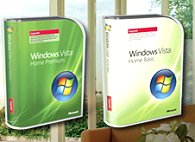 |
| Windows Vista |
But some say the "digital divide" will not disappear if computers do not operate in the same language as their users.
Microsoft's Windows operating system runs a vast majority the world's PCs. The company has rolled out versions of the software in more than 80 world languages, including Afrikaans and Kiswahili. Microsoft's Thomas Hansen says eight more African languages are on the way, including Hausa, Kinyarwanda, Wolof and Yoruba.
"What this is about is making sure that we can provide access to our technology to a much broader group of individuals who may not even have electricity: But may just have it in the future, either in the schools they attend, at the universities they attend, or in their homes," he said. "And when that moment comes, whatever barriers there may be, we want to remove those barriers."
In Senegal, where a Wolof version is set to be released in the coming months, the company turned to linguists3 at Dakar's Cheikh Anta Diop University.
Professor Mame Thierno Cisse says even something as simple as translating Windows' "start" button, was the object of much debate among his colleagues.
He says, a number of technical terms never existed in Wolof and the team of professors often had to try to create new words that could be easily understood by those without technical expertise4.
But even if computers are widely available and Windows is in every language on earth, there remain more fundamental barriers to reducing the digital divide.
For instance, the language on a computer screen will not matter much if a user cannot read. In a number of sub-Saharan countries, more than half the population may be illiterate5.
And even where local languages may be "spoken," not everyone may be comfortable reading or writing it.
In Senegal, while Wolof is used by an estimated 80 percent of the country, schooling6 is still in the official language, French. Most Senegalese web sites are in that language, as well.
But for Mame Thierno Cisse, having the world's most popular operating system in Wolof might encourage the spread of the language. He says, language is a vehicle for culture. And long as that language is not written, it risks disappearing.
In a Dakar cyber café, Assane Thiam, a sharply dressed young man in his twenties is frantically7 typing messages to a friend he waves "Hi" to through a webcam.
"We generally write in French, because, it sometimes is hard to translate it into Wolof," he said.
But asked whether using Windows in Wolof would be interesting to him, he nods vigorously.
Thiam says he runs a cyber café in his village, where just 30 percent of the inhabitants actually use the computers. Maybe, using Wolof might change that, he says.
 收听单词发音
 |
1
vista
|
|
| n.远景,深景,展望,回想 | |
参考例句: |
|
|
|
|
2
fanfare
|
|
| n.喇叭;号角之声;v.热闹地宣布 | |
参考例句: |
|
|
|
|
3
linguists
|
|
| n.通晓数国语言的人( linguist的名词复数 );语言学家 | |
参考例句: |
|
|
|
|
4
expertise
|
|
| n.专门知识(或技能等),专长 | |
参考例句: |
|
|
|
|
5
illiterate
|
|
| adj.文盲的;无知的;n.文盲 | |
参考例句: |
|
|
|
|
6
schooling
|
|
| n.教育;正规学校教育 | |
参考例句: |
|
|
|
|
7
frantically
|
|
| ad.发狂地, 发疯地 | |
参考例句: |
|
|
|


 购买
购买 在百度中搜索