


-
(单词翻译:双击或拖选)
Moscow
23 April 2007
Former Russian President Boris Yeltsin, who had been in declining health for several years, has died at the age of 76. Mr. Yeltsin served as Russia's president from 1990 until his surprise resignation on December 31 1999. During those years he helped steer1 his nation through some of the most tumultuous times in its recent history. VOA's Larry James takes a look at Boris Yeltsin and his legacy2 in this report from Moscow.
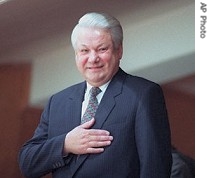 |
| Boris Yeltsin (file photo) |
The booming voice of their newly elected president seemed to galvanize Russians. His defiance3 that day dealt a crushing blow to an attempted coup4 by communist hard-liners against Soviet5 leader Mikhail Gorbachev. It also marked the beginning of the end of the Soviet Union.
Just four months later, Mr. Gorbachev had resigned, the Soviet Union was no more and Boris Yeltsin had emerged as leader of a newly independent Russia.
Boris Yeltsin's rise to power had humble6 beginnings.
He was born the son of peasants in a two-room hut in a bleak7 Ural Mountain village near the city of Sverdlovsk, now known as Yekaterinburg. He never completely lost the common touch and in fact cultivated an image as a champion of the people.
As he rose through the ranks of the Communist Party, he renounced8 the usual privileges of power, riding crowded city busses and subways instead of chauffeur9 driven limousines10.
But the very things that made Mr. Yeltsin popular often put him at odds11 with the Soviet leadership. In October 1987, at a full meeting of the Communist Party Central Committee, he attacked his mentor12, Mikhail Gorbachev and his "perestroika" reforms as too much talk and too little action. The criticism did not go down well. He was publicly censured13 and stripped of his party post yet somehow managed to bounce back.
In June 1991, Mr. Yeltsin rode a pro-democracy wave to victory in Russia's first-ever popular presidential election. Two months later his heroic stand on the turret14 of a tank solidified15 his image as a crusader for change. But as the years unfolded, the country's feelings for the man called "the father of Russian democracy" fluctuated wildly between adoration16 - and hatred17. Despite his commitment to democracy, he retained the authoritarian18 instincts of an old-style communist bureaucrat19 used to getting his way by force.
In 1993, President Yeltsin scrapped20 the Soviet-era constitution and dissolved parliament. Hard-line lawmakers and their supporters fought back. He responded by dispatching tanks to the parliament building to crush their revolt.
A year later, Mr. Yeltsin again issued a command that would result in bloodshed.
He ordered troops to the breakaway Chechnya region in an attempt to crush a separatist movement. More than 75,000 people - most of them civilians21 - died. As the war came to a disastrous22 close and Russian troops withdrew, he called it the greatest disappointment of his presidency23.
The combination of a failed war and a failing economy seemed to spell the end for Boris Yeltsin's political career. But as he did so many times, he rose to the challenge in the 1996 presidential election, defeating his communist challenger by a healthy margin24.
Just days before the election, he suffered a heart attack and would later undergo multiple bypass heart surgery that was to sideline him for more than six months. He came back strong for a brief time, but the demands of office, and his love of alcohol, soon took their toll25. There were several incidents of erratic26 behavior that observers attributed to his declining health.
As his health slipped, his once sharp political instincts also seemed to fail him. He embarked27 on a series of government reshuffles, changing prime ministers seemingly at whim28. As his term as president was winding29 down he was little more than a figurehead, but he had one final surprise for Russia.
On New Year's Eve 1999, with just six months remaining in his second term of office, he resigned - turning over the presidency to his prime minister, Vladimir Putin, the man he had handpicked to succeed him.
For a time it seemed Boris Yeltsin's legacy as the father of Russia's democracy had been tarnished30 by his political and physical decline. But once out of office opinion gradually softened31.
His reputation may still be a little damaged by the blunders of his last few years, but what endures is the image of a burly Siberian clambering up on a tank to defy the Communists, and help Russia throw off its Soviet past.
 收听单词发音
 |
1
steer
|
|
| vt.驾驶,为…操舵;引导;vi.驾驶 | |
参考例句: |
|
|
|
|
2
legacy
|
|
| n.遗产,遗赠;先人(或过去)留下的东西 | |
参考例句: |
|
|
|
|
3
defiance
|
|
| n.挑战,挑衅,蔑视,违抗 | |
参考例句: |
|
|
|
|
4
coup
|
|
| n.政变;突然而成功的行动 | |
参考例句: |
|
|
|
|
5
Soviet
|
|
| adj.苏联的,苏维埃的;n.苏维埃 | |
参考例句: |
|
|
|
|
6
humble
|
|
| adj.谦卑的,恭顺的;地位低下的;v.降低,贬低 | |
参考例句: |
|
|
|
|
7
bleak
|
|
| adj.(天气)阴冷的;凄凉的;暗淡的 | |
参考例句: |
|
|
|
|
8
renounced
|
|
| v.声明放弃( renounce的过去式和过去分词 );宣布放弃;宣布与…决裂;宣布摒弃 | |
参考例句: |
|
|
|
|
9
chauffeur
|
|
| n.(受雇于私人或公司的)司机;v.为…开车 | |
参考例句: |
|
|
|
|
10
limousines
|
|
| n.豪华轿车( limousine的名词复数 );(往返机场接送旅客的)中型客车,小型公共汽车 | |
参考例句: |
|
|
|
|
11
odds
|
|
| n.让步,机率,可能性,比率;胜败优劣之别 | |
参考例句: |
|
|
|
|
12
mentor
|
|
| n.指导者,良师益友;v.指导 | |
参考例句: |
|
|
|
|
13
censured
|
|
| v.指责,非难,谴责( censure的过去式 ) | |
参考例句: |
|
|
|
|
14
turret
|
|
| n.塔楼,角塔 | |
参考例句: |
|
|
|
|
15
solidified
|
|
| (使)成为固体,(使)变硬,(使)变得坚固( solidify的过去式和过去分词 ); 使团结一致; 充实,巩固; 具体化 | |
参考例句: |
|
|
|
|
16
adoration
|
|
| n.爱慕,崇拜 | |
参考例句: |
|
|
|
|
17
hatred
|
|
| n.憎恶,憎恨,仇恨 | |
参考例句: |
|
|
|
|
18
authoritarian
|
|
| n./adj.专制(的),专制主义者,独裁主义者 | |
参考例句: |
|
|
|
|
19
bureaucrat
|
|
| n. 官僚作风的人,官僚,官僚政治论者 | |
参考例句: |
|
|
|
|
20
scrapped
|
|
| 废弃(scrap的过去式与过去分词); 打架 | |
参考例句: |
|
|
|
|
21
civilians
|
|
| 平民,百姓( civilian的名词复数 ); 老百姓 | |
参考例句: |
|
|
|
|
22
disastrous
|
|
| adj.灾难性的,造成灾害的;极坏的,很糟的 | |
参考例句: |
|
|
|
|
23
presidency
|
|
| n.总统(校长,总经理)的职位(任期) | |
参考例句: |
|
|
|
|
24
margin
|
|
| n.页边空白;差额;余地,余裕;边,边缘 | |
参考例句: |
|
|
|
|
25
toll
|
|
| n.过路(桥)费;损失,伤亡人数;v.敲(钟) | |
参考例句: |
|
|
|
|
26
erratic
|
|
| adj.古怪的,反复无常的,不稳定的 | |
参考例句: |
|
|
|
|
27
embarked
|
|
| 乘船( embark的过去式和过去分词 ); 装载; 从事 | |
参考例句: |
|
|
|
|
28
whim
|
|
| n.一时的兴致,突然的念头;奇想,幻想 | |
参考例句: |
|
|
|
|
29
winding
|
|
| n.绕,缠,绕组,线圈 | |
参考例句: |
|
|
|
|
30
tarnished
|
|
| (通常指金属)(使)失去光泽,(使)变灰暗( tarnish的过去式和过去分词 ); 玷污,败坏 | |
参考例句: |
|
|
|
|
31
softened
|
|
| (使)变软( soften的过去式和过去分词 ); 缓解打击; 缓和; 安慰 | |
参考例句: |
|
|
|


 购买
购买 在百度中搜索