普通高中课程标准实验教科书 英语选修9 Unit 4 Exploring plants
时间:2009-10-13 07:27:15
搜索关注在线英语听力室公众号:tingroom,领取免费英语资料大礼包。
(单词翻译)
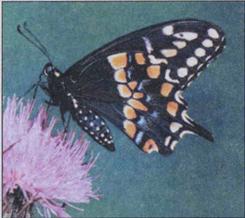
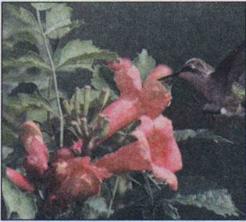
Reading and discussingBefore you read the text on page 38, have a quick glance at it. What is the text about? What do the pictures show you? What is the chart about?
FLOWERS AND THEIR ANIMAIL POLLINATORS
Over time, many flowering plants and their animal pollinators have evolved together. The plant needs the animal to pollinate it and the animal is rewarded with food called nectar when it visits the flowers. Pollen1 becomes attached to the animal during its visit to a flower and is then passed on to another plant's blossom on its next visit. So pollination2 takes place, therefore increasing the chances of the survival of the plant species.
Through evolution, most flowers have adapted to attract specific types of pollinators. Bees, moths4 and butterflies are the most important
The type of pollinator depends on the characteristics of the flower such as its colour, shape, size and smell. For example, yellow flowers attract bees, while red flowers attract butterflies. The nectar in some flowers can only be reached by a bird with a long bill or a long-tongued moth3 or butterfly. The chart below describes some features of flowers that attract certain kinds of pollinators.
|
Pollinator
|
Typical flower characteristics
|
|
Bees
|
Colour: bright yellow, blue; the flower often has a special pattern to guide the bees to the nectar inside.
|
|
Butterflies
|
Colour: red, orange.
Shape: the petals form a tube of a suitable length for butterflies. Tiny flowers are often in tight bunches that provide a place for butterflies to land on, eg daisies.
Smell: odourless.
|
|
Moths
|
Colour: white, light-coloured so moths can see them at night.
Shape: the petals form a deep tube to match the length of a specific moth's tongue. The petals lie fiat9 or bend back so the moth can get close to the flower.
Smell: strong, sweet perfume, typically only given out
at night.
|
|
Flies
|
Colour: dull-coloured, brownish red.
Smell: strong like rotting meat.
|
|
Humming-birds
|
Colour: brightly coloured, especially red and orange.
Smell: no odour.
|
|
Bats
|
Colour: white, light-coloured so bats can see them at night.
Shape: open at night; large, strong with wide mouths for long tongues.
Smell: musty, fruity smell.
|